From Data to Discovery: Insights from the First MBC DART Symposium
This guest post is one of a series of reports back from patient advocates who attended cancer conferences in 2025 with the help of a travel scholarship from the MBC Alliance’s Shirley Mertz Memorial Travel Grant Program. Read the prior post here.
 By Marybeth Gilliam | Individual Advocate Member & Travel Grant Recipient
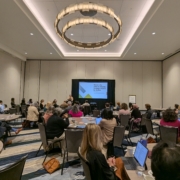
Walking into the first-ever Metastatic Breast Cancer: Discovery & Accelerating Research Together (MBC DART) Symposium on November 13, I felt immense anticipation as oncologists, researchers, patient advocates, industry leaders, and other stakeholders gathered in one room with a shared goal: to accelerate progress for people living with metastatic breast cancer. Hosted by Theresa’s Research, the symposium convened for a full day of sessions and workshops focused on unmet needs and truly novel approaches to research and care.
Thanks to support from the MBC Alliance’s Shirley Mertz Memorial Travel Grant Program, I had the opportunity to attend—and what I witnessed was a shift I’ve been hoping to see for years.
The DART Cancer Symposium reinforced something I learned throughout my career in qualitative and quantitative research: the most powerful insights come from looking beyond the averages and examining the meaningful differences hidden in the data. In my prior work with hospitals, the strategic breakthroughs always came from understanding why certain groups behaved differently—why they improved, why they didn’t, and what separated exceptional outcomes from average ones. When I began engaging with clinical research after my own metastatic diagnosis, I was struck by how broad many study designs were and how much potentially meaningful information was missing—variables that could explain differential responses.
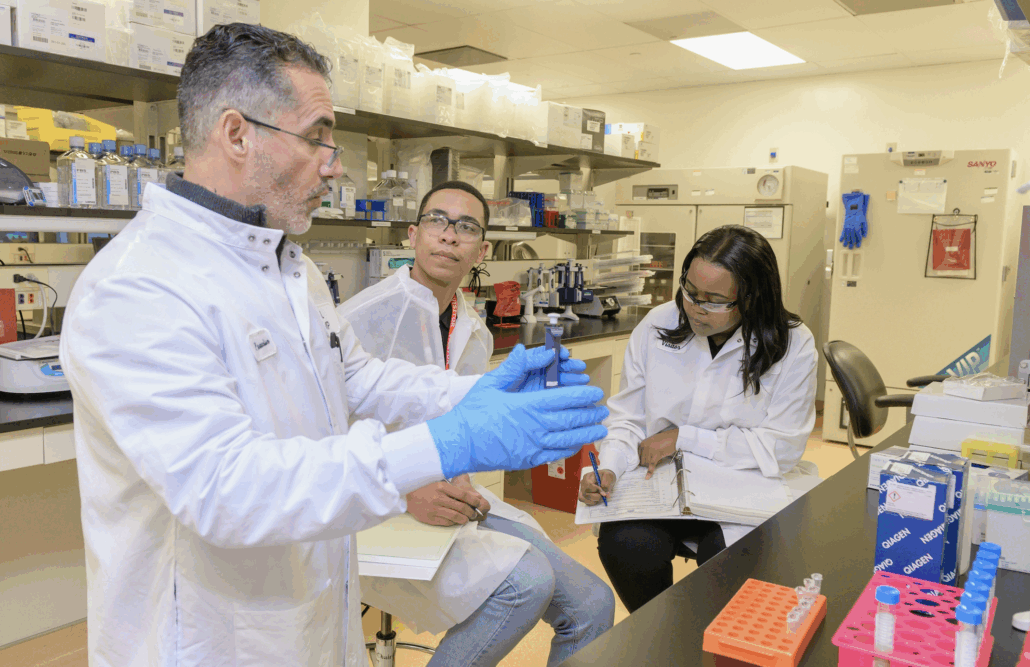
At the DART Symposium, for the first time, I saw researchers equipped with tools capable of answering those questions. Technologies such as ctDNA testing, genomic sequencing, and artificial intelligence are finally giving us the ability to understand each patient’s biology—and each response—in far greater detail.
My conversation with Dr. Nathan Fowler from BostonGene underscored this shift. He described the frustration of past trials where a small subset of patients achieved remarkable benefit, but the overall study failed because the majority did not. What was once labeled a “failed” trial may now be understood as a highly successful signal—if we can identify who those exceptional responders were and why they responded. With ctDNA and AI, we can begin designing studies around the patients most likely to benefit, transforming both research efficiency and patient outcomes.
At the same time, the gap between research innovation and clinical practice was striking. While researchers at the symposium universally used ctDNA to track resistance, detect early treatment failure, and guide rapid therapeutic switching, most oncologists are still hesitant to adopt it. This disconnect leaves patients without a powerful tool already reshaping scientific understanding. That’s why the introduction of a proposed ctDNA-RECIST criteria felt so impactful. Clear, standardized guidance on how to interpret and act on ctDNA results has the potential to remove major barriers to adoption and help more patients benefit from the precision approaches increasingly driving progress in the field.
The application period for the MBC Alliance’s Shirley Mertze Memorial Travel Grant Program is targeted to open in January, with a deadline of four to six weeks to apply. If you are a patient advocate member, watch your inbox to be notified when the program opens.